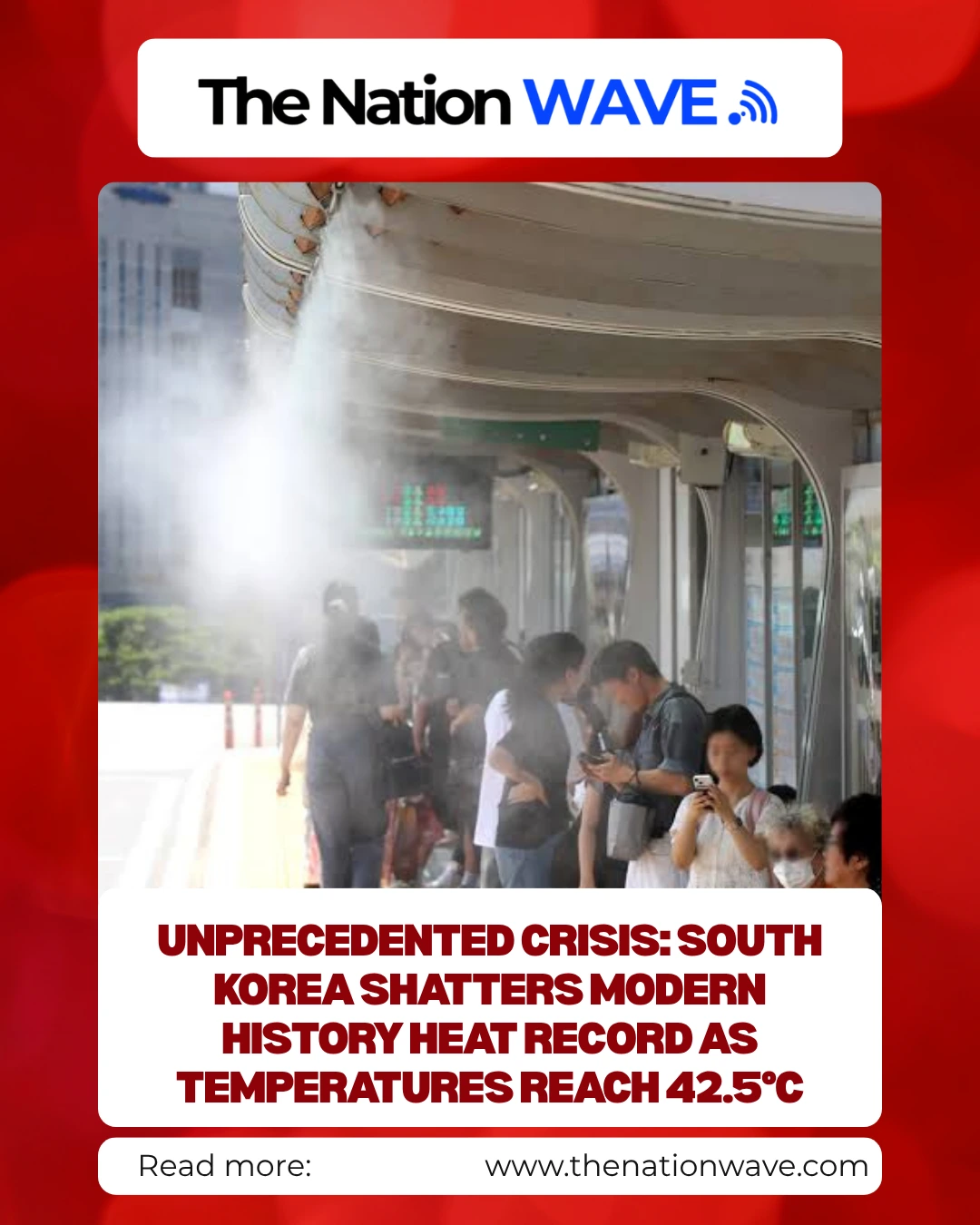
Unprecedented Crisis: South Korea Shatters Modern History Heat Record as Temperatures Reach 108.5°F/42.5°C
SEOUL, South Korea — South Korea has entered unchartered meteorological territory after recording its highest temperature in modern history. The Korea Meteorological Administration (KMA) confirmed that mercury levels in the southeastern city of Yangsan soared to an unprecedented 42.5°C (108.5°F) shortly after midday on Sunday.
The blistering heat wave marks the single highest temperature reading logged since the Korean Peninsula established its formal weather observation network in 1904. The extreme climate phenomenon has triggered government-wide emergency protocols, widespread public health advisories, and mounting concerns over national energy grid stability.
The Epicenter: Five Consecutive Days Above 40°C
Located approximately 310 kilometers southeast of Seoul, the industrial hub of Yangsan in South Gyeongsang Province has become the ground zero of South Korea’s heat crisis. According to official data from the KMA, Sunday marked the fifth consecutive day where local temperatures breached the 40°C (104°F) threshold.
Key Weather Statistics Recorded Figures Historical Context
National Peak Temp 42.5°C (108.5°F) All-time highest since 1904
Yangsan City Peak 42.5°C (Aug 2) Shattered previous day’s 41.6°C record
Gyeongju Peak 40.2°C (104.4°F) Highest local reading of the year
Heatwave Alerts Active 20+ Major Localities Under Level 2 Emergency protocols
Meteorologists noted an alarming trend in how quickly heat is accumulating. On previous days, temperatures crossed the 40°C mark late in the afternoon. However, on Sunday, temperatures surpassed 40°C before 12:00 PM, accelerating thermal pressure on local infrastructure and urban centers. Neighboring historical hubs, including Gyeongju, also witnessed severe heat conditions, recording 40.2°C. Major metropolitan cities like Busan and Daegu continue to register temperatures climbing into the upper 30s.
Government Activates Emergency Disaster Headquarters
In response to the rapidly worsening situation, the South Korean government escalated its national response framework. Authorities officially launched a Level 2 Emergency Operation under the Central Disaster and Safety Countermeasures Headquarters to mobilize inter-agency resources.
Prime Minister Han Seong-sook issued direct emergency directives instructing government ministries and municipal bodies to immediately secure public health measures.
“Government agencies and provincial administrations must prioritize safety checks for vulnerable demographics, including senior citizens, outdoor workers, and low-income urban households. Maintaining uninterrupted electrical grid stability and water supplies remains critical,” stated the Prime Minister’s office during an emergency administrative briefing.
More than 20 administrative territories across the country have been placed under designated Emergency Heatwave Alerts—a specialized high-alert classification created by South Korea in 2026 to manage severe, prolonged thermal events.
Disruption to Everyday Life and Public Health
The intense heat dome hovering over the country has forced millions of residents to alter daily routines drastically. Public streets in major cities emptied during peak daylight hours as citizens sought refuge inside air-conditioned commercial spaces, subterranean transit hubs, and public cooling centers.
Health authorities and weather officials took the rare step of advising citizens to “immediately halt all outdoor physical activities” during afternoon hours. Furthermore, professional sports leagues, including the Korea Baseball Organization (KBO), canceled scheduled outdoor games citing dangerous playing conditions for athletes and spectators.
Medical facilities across the country reported an influx of patients suffering from heat exhaustion, thermal cramps, and severe heatstroke. Hospitals in major urban areas expanded triage setups to manage heat-related illnesses among vulnerable populations, particularly agricultural workers and elderly individuals in rural communities.
The Broader Context: Climate Trends in East Asia
The historic 42.5°C milestone aligns with long-term climate projections indicating a rapid increase in heat intensity across the Korean Peninsula. Data released by the KMA highlights that the average number of annual “heatwave days” (defined as days with maximum temperatures exceeding 33°C) has more than doubled over recent decades.
HEATWAVE DAYS PER YEAR (KMA HISTORICAL DATA)
1970s : █ 8 Days
2020s : ████████ 19 Days
2026 : █████████████ (Pacing toward record levels)
Climate scientists point toward a combination of global climate change, sea surface temperature anomalies in the North Pacific, and persistent high-pressure atmospheric systems that act as a trapped “heat dome” over East Asia. Similar record-setting heat events have rattled neighboring nations across East Asia in recent weeks, causing widespread power grid strains and agricultural disruption.
Looking Ahead: Power Demand and Outlook
With weather forecasts indicating that high-pressure systems are likely to persist, power grid operators are closely monitoring national electricity demand. Air-conditioning usage across commercial, industrial, and residential sectors has surged toward all-time records.
The KMA has instructed citizens to remain updated via real-time disaster alert broadcasts, practice frequent hydration, and avoid unventilated areas. As South Korea navigates this unprecedented heat crisis, local governments continue to operate cooling shelters around the clock to prevent further heat-related fatalities.